

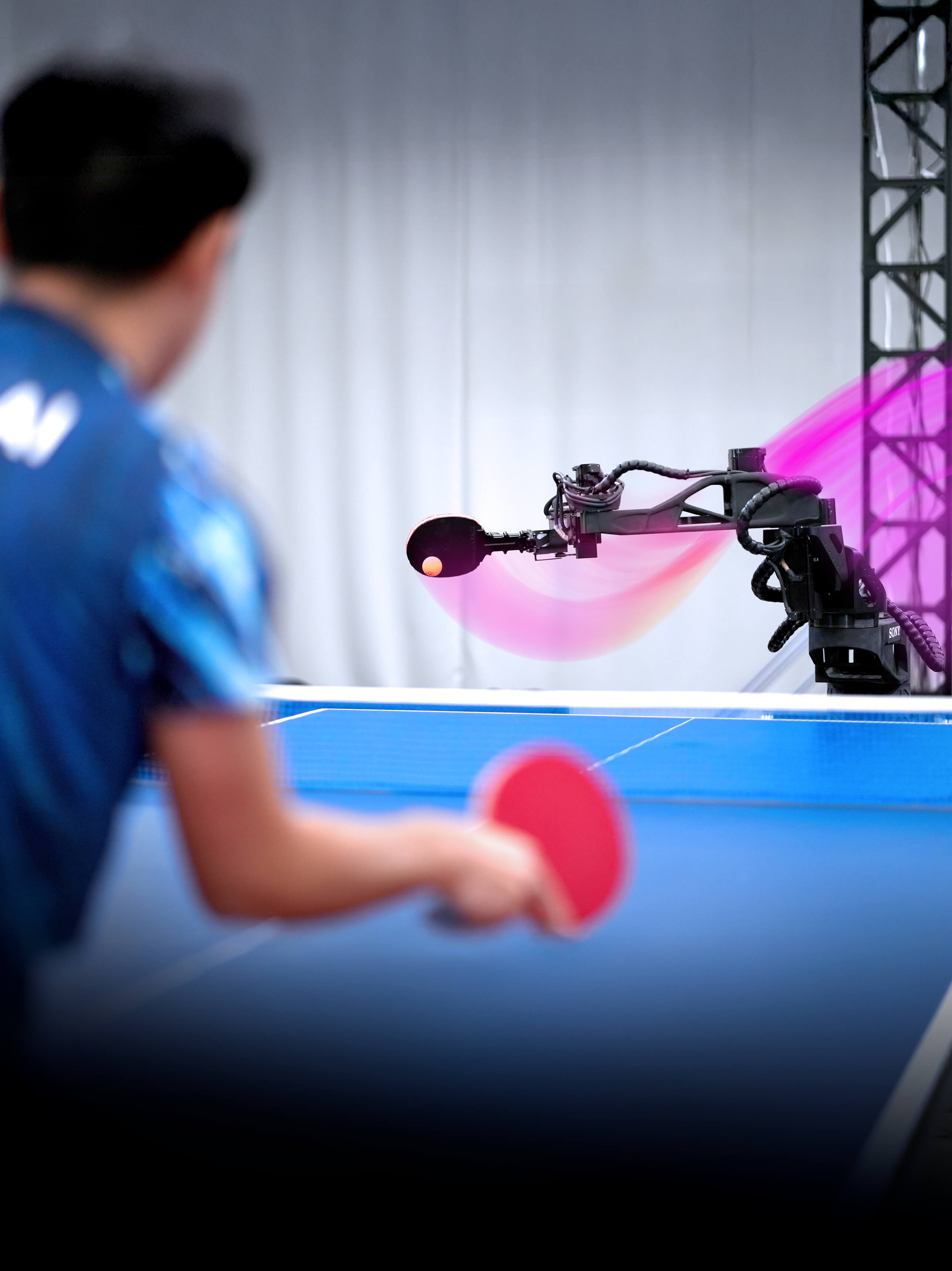
Outplaying Elite Table Tennis Players: A Breakthrough in Autonomous Robotics
Sony AI’s latest research, published on the cover of Nature, addresses a long-standing challenge in physical AI: Can a high-speed autonomous system master the complex perception and dynamic control required to compete against professional athletes?
Since the first "robot ping-pong" competition in 1983, table tennis has served as a challenge for autonomous systems. Although many research groups have since advanced the field, the sport's demand for millisecond precision and unpredictable human interaction remained a significant barrier.
Sony AI addresses these challenges through the Ace research project, which integrates event-based sensing, deep reinforcement learning, and a highly agile robotic platform.
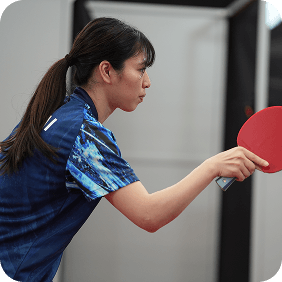
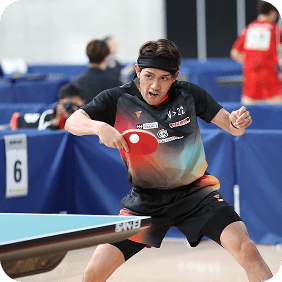
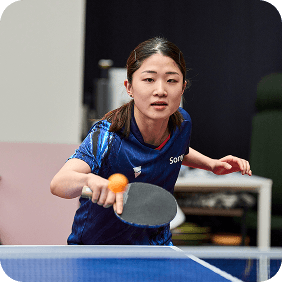
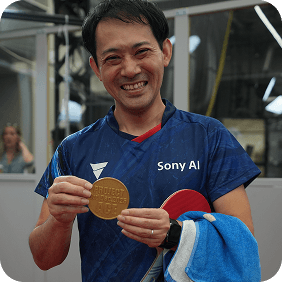
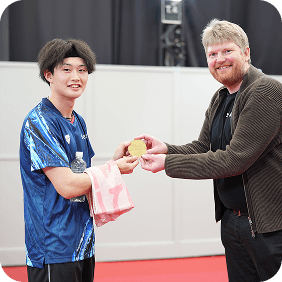
Adhering to the official rules of the International Table Tennis Federation (ITTF), Ace achieved multiple wins against elite players and, for the first time, a victory over a professional player. These results demonstrate the potential for physical AI agents to outperform human experts in complex, interactive, real-time tasks—marking a significant milestone in the evolution of autonomous robotics.
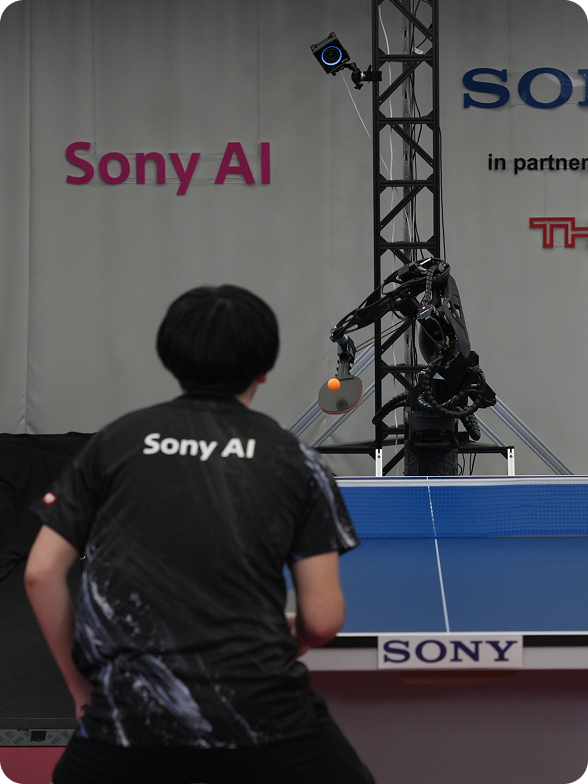

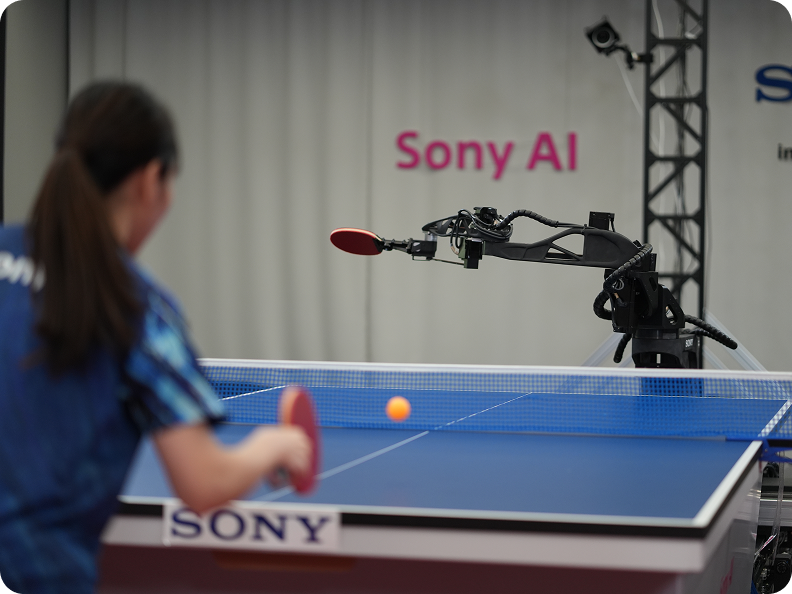
Superhuman Perception — Seeing Like a Professional Athlete
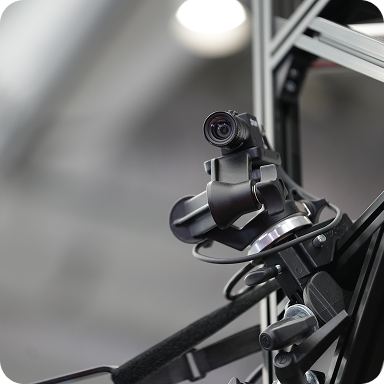
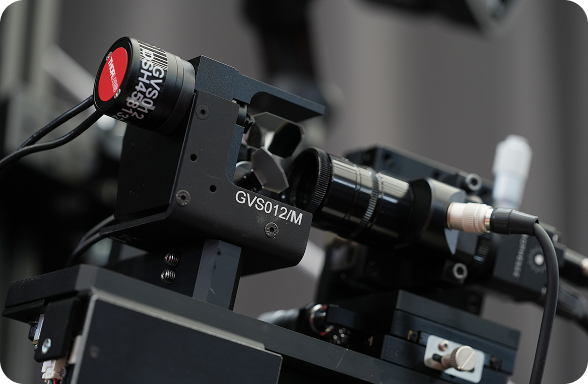
Ace achieves its unprecedented ball tracking through a hybrid vision system utilizing a total of 12 high-speed sensors. The system integrates three IMX636 event-based vision sensors (EVS)—developed in collaboration between Sony and Prophesee—which capture motion with sub-millisecond precision by only registering pixel-level changes in brightness. This allows Ace to track the 40 mm ball and measure spin exceeding 9,000 revolutions per minute.
Supplementing the EVS are nine Sony Pregius™ IMX273 active pixel sensors (APS) operating at 200 Hz, which provide the high-resolution intensity frames necessary for robust 3D triangulation. This integrated sensing suite results in a perception latency of just 10.2 ms, providing the precise state estimation required to predict complex trajectories under the extreme conditions of professional play.
Superhuman Control — Deciding in Milliseconds
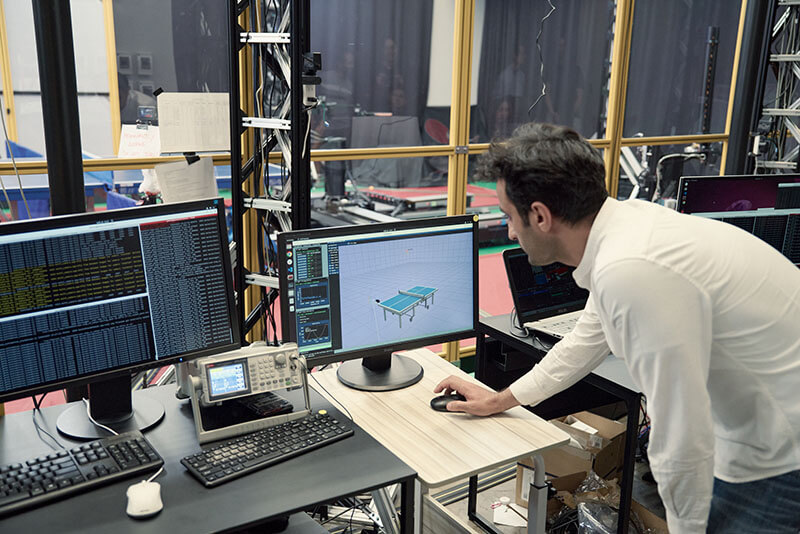
To master the high-speed of professional play, Ace uses a control policy trained via deep Reinforcement Learning (RL) within a physics-accurate simulation. This Sim2Real approach involves training the agent on synthetic data that is initialized based on instances captured from recorded human gameplay, allowing it to internalize complex control behaviors before physical deployment.
The control policy operates at a high-frequency control cycle of 1kHz, ensuring the system can adapt its swing trajectory in mid-flight to account for the unpredictable dynamics of a live rally. Importantly, the system uses a hierarchical architecture that decouples strategic decision-making from low-level motor control. For each shot this allows Ace to sample a different skill, which is then passed to the control policy for execution. This ensures variety in gameplay and keeps the human opponents guessing what Aces next move will be.
Engineered for Agility — Built for the Physics of High-Speed Play
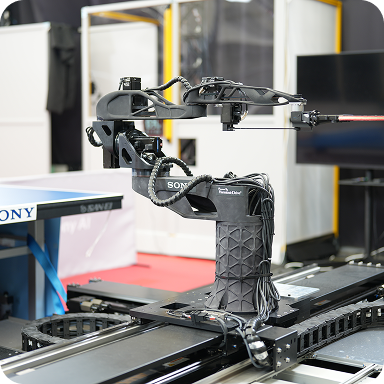
To match the speed of professional athletes, the robot hardware includes two prismatic and six revolute joints optimized for rapid lateral movement and striking precision, an end effector equipped with a racket, and a cup to hold the ball, facilitating one-armed serves.
This design provides the dexterity required to execute a full range of professional shots, including topspin and slices. The hardware is specifically tuned for the physics of high-speed interaction which allows Ace to return balls at linear velocities of up to 19.6m/s, providing the necessary speed to engage in professional-level rallies and execute competitive serves.
Sony Semiconductor Solutions
Provided the high-speed sensing suite, including the IMX636 event-based vision sensors and IMX273 active pixel sensors, which enabled Ace’s 10.2 ms perception latency.
Victas
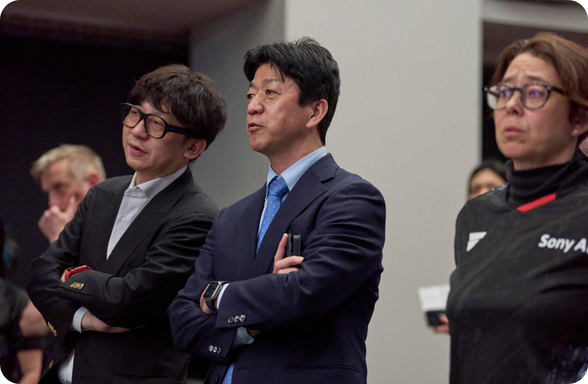
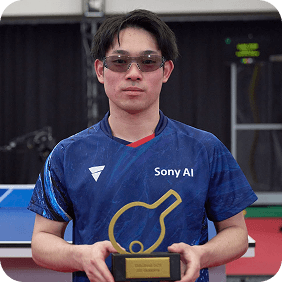
A leading table tennis equipment manufacturer serving as our official athletic partner, providing player recruitment, data collection and analysis, strategic insights, and experimental environment setup.





Nature Paper
The definitive publication documenting Ace’s design, training process, evaluation, and results.